


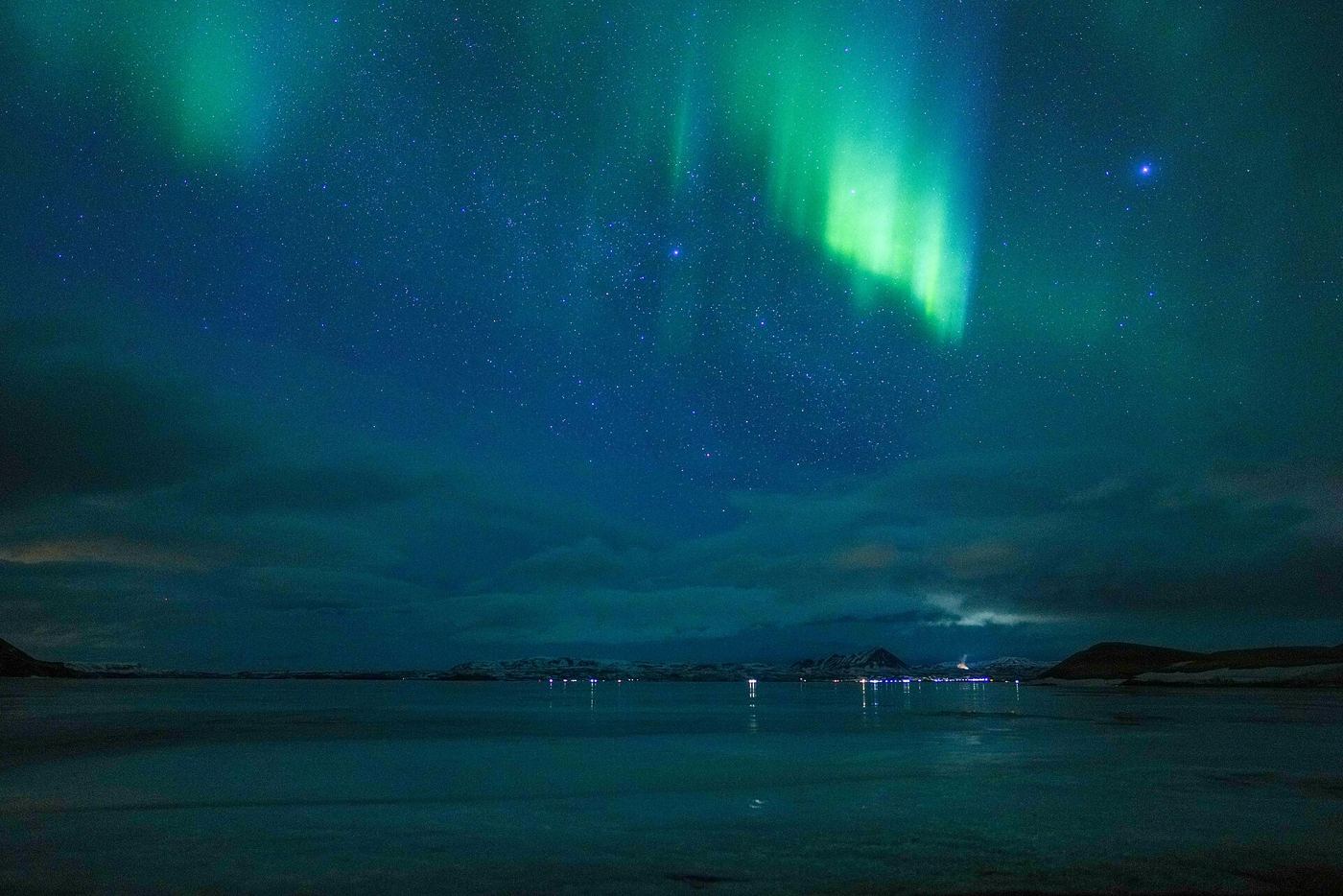
The Sun reached the peak of its current activity cycle in October 2024, and the light show that followed was the best in decades. Solar Cycle 25, which began in December 2019, was forecast by a NOAA and NASA panel to be a weak cycle, with a maximum smoothed sunspot number of about 115. Instead it peaked at about 161, far above the prediction, and produced a series of exceptional geomagnetic storms. The strongest, in May 2024, was the most powerful since the Halloween storms of 2003 and pushed the northern lights as far south as Mexico, Cuba and Hawaii, with auroras visible from every US state. Further severe storms followed in November 2025 and January 2026, with auroras seen over Belgium and as far south as Florida. It was a reminder that the Sun, not just the weather, shapes the skies above us.
What the Evidence Shows
The aurora appears when charged particles from the Sun disturb Earth’s magnetic field, and the oval of light normally sits over the high Arctic. During strong storms it expands far south, which is why people in places that rarely see the lights suddenly found their skies glowing green and red. The same storms can disturb satellites, radio signals and power grids, so space weather forecasters watch the Sun closely, and the peak years are the busiest time for them. Activity is now easing as the cycle declines toward a minimum expected around 2030, but the declining phase still produces strong storms, and the 2026-27 winter remains one of the best aurora seasons of the decade. The next cycle is not expected to peak until the mid-2030s. For now, skywatchers have a rare window: a few more years of vivid displays before the Sun quiets down again. Reporting and analysis from sources such as National Science Foundation track the same developments, and specialists following solar maximum aurora displays say the direction is now consistent across independent lines of evidence.
The Wider Context
The wider context is a research landscape in which replication and open data now decide reputations. Findings connected to solar maximum aurora displays are being checked by independent groups with shared datasets, and the teams involved publish their methods in full so rivals can test every step. That discipline is slower than a headline cycle, but it is why results in this area increasingly survive first contact with scrutiny.
What Happens Next
What happens next in the story of solar maximum aurora displays will be decided by follow-up work already under way: larger samples, longer observation and instruments that have not yet come online. The researchers involved are unusually united on one point, that the current results justify the next investment of time and money. Readers will not have to wait long for the first tests of that claim. You can follow related developments in our coverage of science.
There is a practical lesson in all of this for readers deciding what to do today. Start with the verified facts, be wary of anyone promising certainty, and prefer reversible steps while the evidence is still developing. Circumstances differ by country, income and personal situation, so general guidance should always be weighed against your own context before you act on it in any significant or lasting way.
