


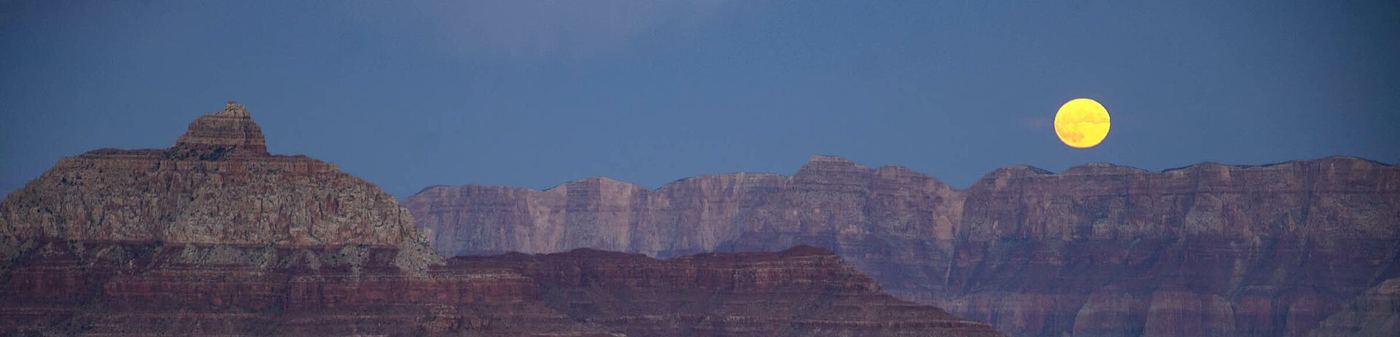
Every year, the Moon moves about 3.8 centimetres farther from Earth, roughly the speed at which fingernails grow, and scientists have been measuring this slow retreat with remarkable precision. The evidence comes from reflectors left on the lunar surface by Apollo astronauts and Soviet rovers, which bounce laser beams back to Earth and allow researchers to track the distance to within millimetres. The cause is the tides: the Moon’s gravity pulls Earth’s oceans into bulges, and because Earth spins faster than the Moon orbits, those bulges sit slightly ahead of the Moon, tugging it forward and adding energy to its orbit. As the Moon gains energy it moves outward, while the same interaction slows Earth’s rotation, making our days a tiny fraction longer over time. The same laser measurements also reveal subtle wobbles in the Moon’s orbit and rotation, giving scientists clues about the structure of its interior, including the size of its core and whether parts of it are still molten.
What the Evidence Shows
The drift is far too slow to notice in a human lifetime, but over billions of years it has reshaped both worlds. When the Moon formed, it was far closer and appeared much larger in the sky, and Earth’s days lasted only a few hours. In the distant future, the Moon will be farther still, total solar eclipses will no longer be possible because the Moon will appear too small to cover the Sun, and Earth’s rotation will keep slowing. Researchers also use the Moon’s retreat to study the history of the oceans, since the rate of drift depends on how tides interacted with ancient continents and shallow seas. It is a reminder that the Earth-Moon system is still evolving, and that the familiar sight of the Moon overhead is a snapshot in a very long story. Eventually, billions of years from now, the drift will slow as Earth and the Moon become tidally locked, each always showing the same face to the other, much as the Moon already does to us today. Reporting and analysis from sources such as National Science Foundation track the same developments, and specialists following Moon drifting away from Earth say the direction is now consistent across independent lines of evidence.
The Wider Context
The wider context is a research landscape in which replication and open data now decide reputations. Findings connected to Moon drifting away from Earth are being checked by independent groups with shared datasets, and the teams involved publish their methods in full so rivals can test every step. That discipline is slower than a headline cycle, but it is why results in this area increasingly survive first contact with scrutiny.
What Happens Next
What happens next in the story of Moon drifting away from Earth will be decided by follow-up work already under way: larger samples, longer observation and instruments that have not yet come online. The researchers involved are unusually united on one point, that the current results justify the next investment of time and money. Readers will not have to wait long for the first tests of that claim. You can follow related developments in our coverage of science.
There is a practical lesson in all of this for readers deciding what to do today. Start with the verified facts, be wary of anyone promising certainty, and prefer reversible steps while the evidence is still developing. Circumstances differ by country, income and personal situation, so general guidance should always be weighed against your own context before you act on it in any significant or lasting way.
